
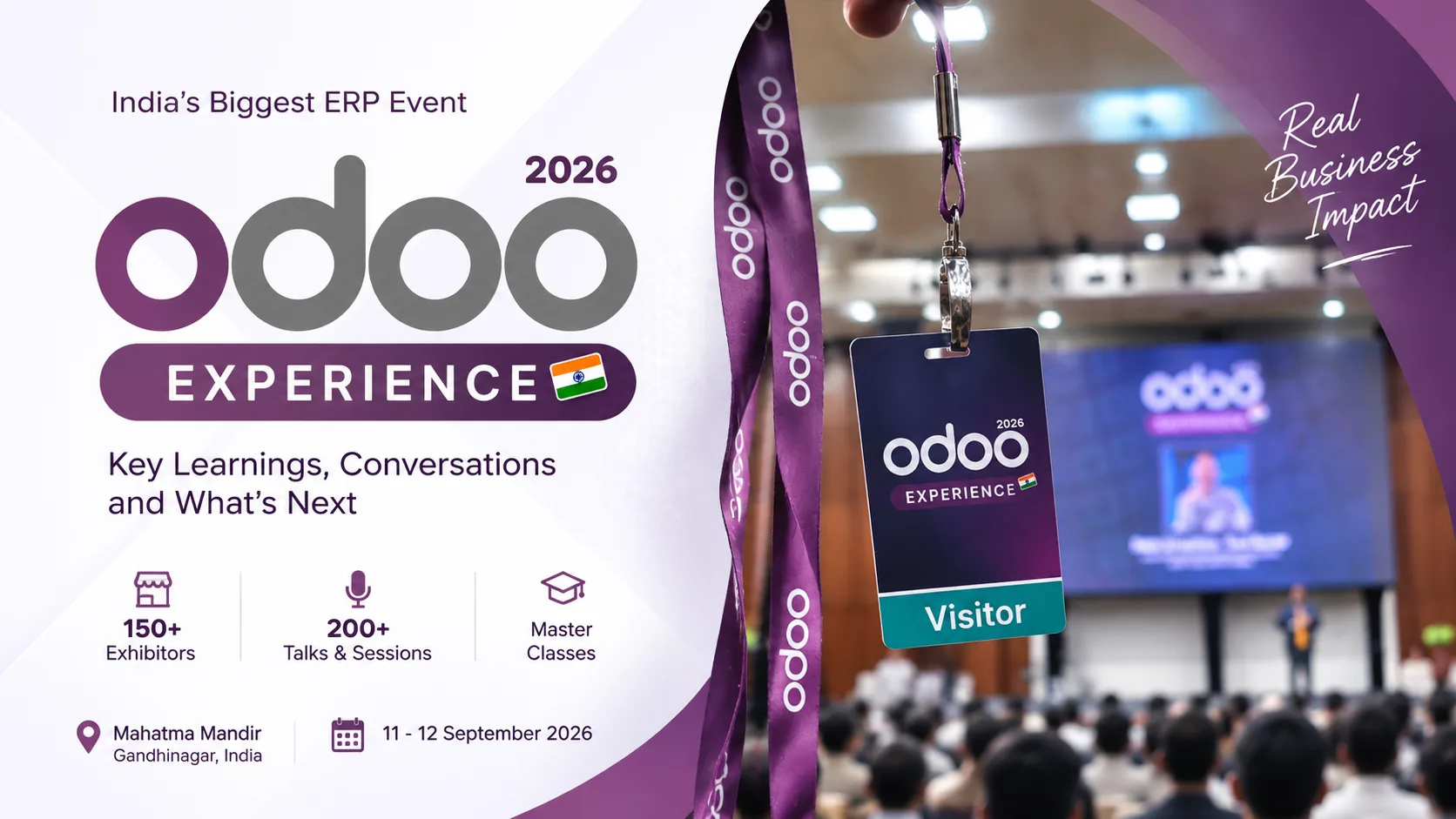
On 11 and 12 September 2026, Mahatma Mandir Convention Center in Gandhinagar turned into what is easily one of the biggest technology and business gatherings in India right now Odoo Experience 2026 India. I attended last year as well, so I walked in this time with a plan instead of just curiosity. Two full days, a lot of walking, a lot of conversations, and a notebook that came home much heavier than it went.
The venue and the scale
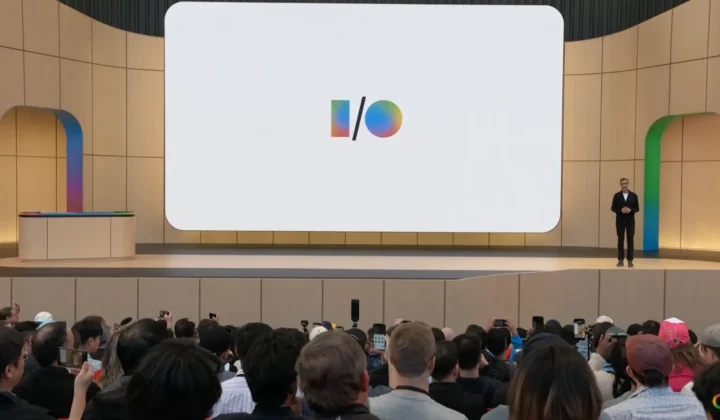
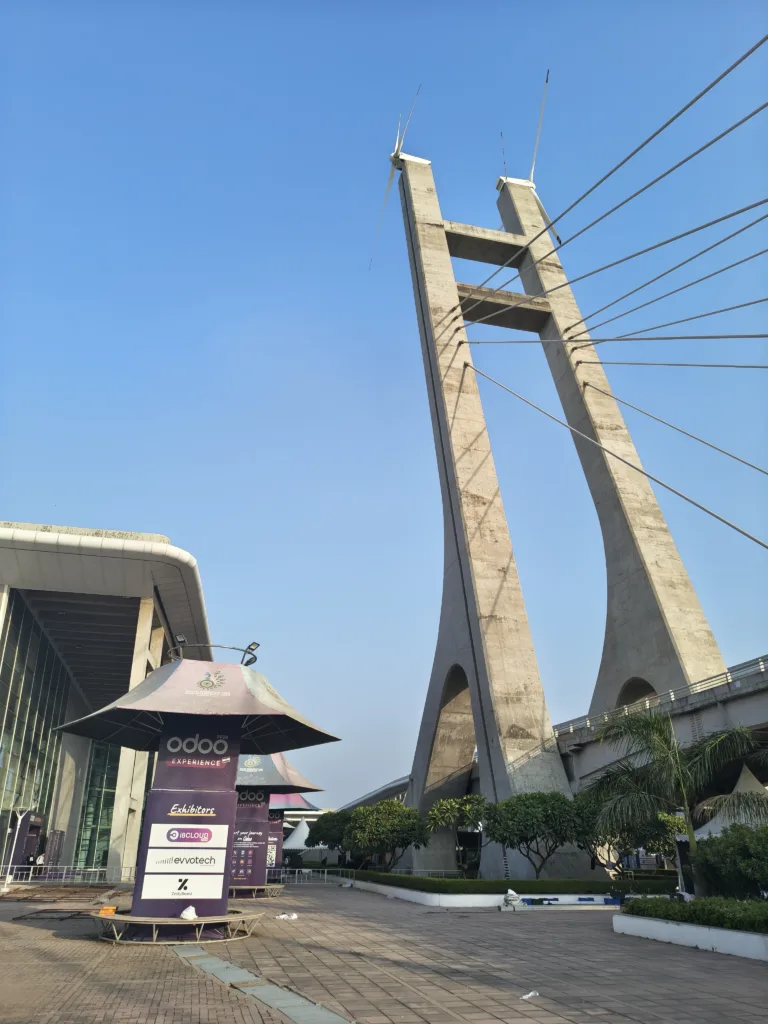
Same venue as last year Mahatma Mandir, Gandhinagar. If you have been there for any large summit, you already know the space handles crowds well, and Odoo used every bit of it.
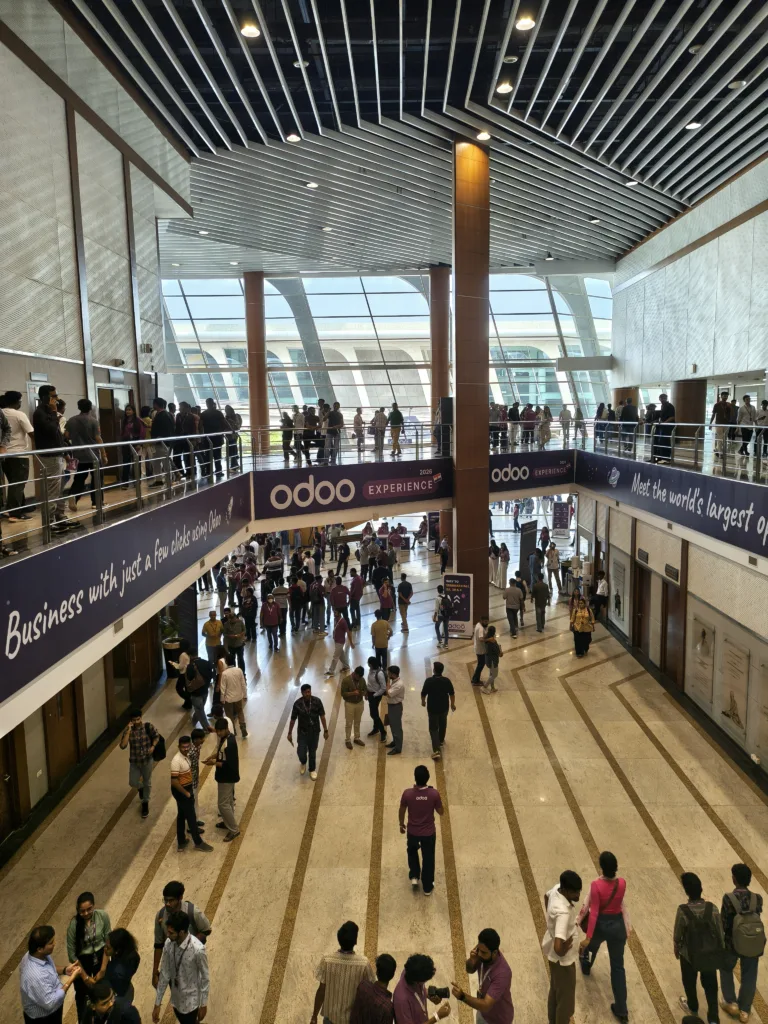
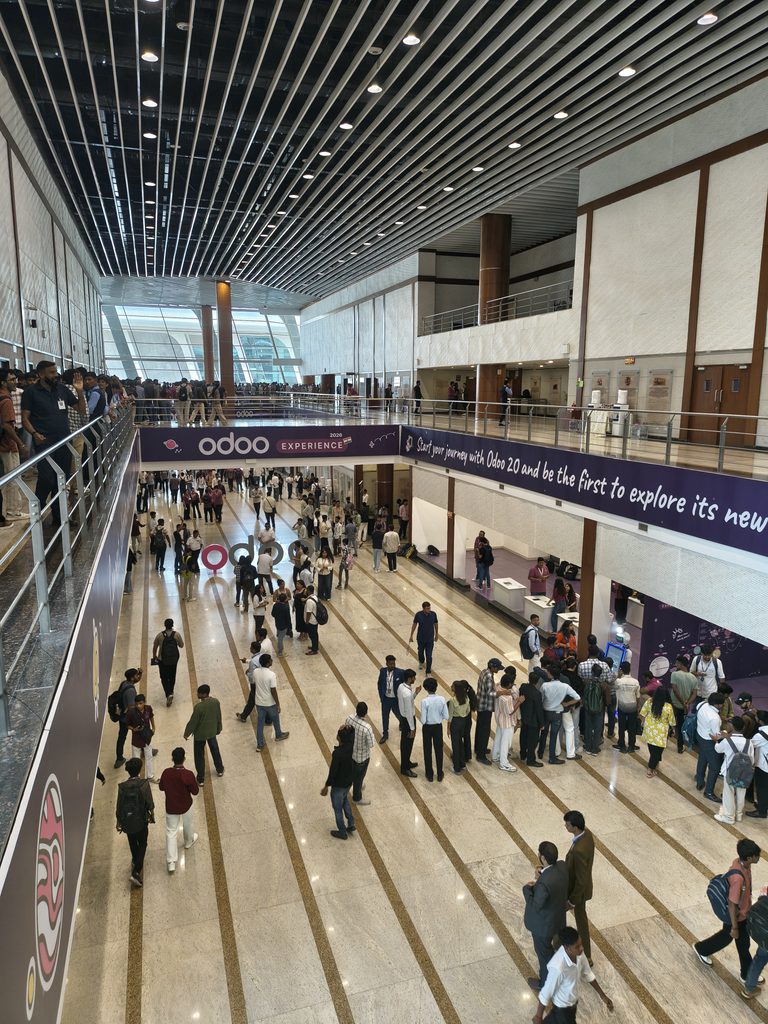
The numbers give you a sense of the scale: more than 150 exhibitor booths spread across the exhibition halls, 200+ talks and sessions, and master classes running alongside the main programme. You genuinely cannot see everything in two days. I tried. You have to pick.
Odoo 20 launched here
The headline of the event was the launch of Odoo 20. Seeing a major ERP version go live in front of a hall full of people is a different experience from reading release notes later.
What stood out to me across the demos and booth conversations was how much of the new direction is pointed at automation and AI sitting inside business workflows rather than bolted on the side. For someone like me who works on web, e-commerce and automation for clients, that is not an abstract feature list. It changes what I can offer.
150+ booths and the conversations that came with them
Honestly, the exhibition floor was my favourite part.
Every booth is a company partners, implementation teams, app developers, consultants — and almost all of them are happy to walk you through what they actually built and what broke while building it. I spoke with people handling manufacturing ERP, supply chain and inventory, PIM setups, CRM rollouts, custom module development, and third-party integrations.
A few things I noticed while moving booth to booth:
- Almost every serious partner now has an AI story attached to their Odoo offering, and the good ones can explain exactly where it saves hours.
- The most useful conversations were never the pitch ones. They were the “what went wrong in this implementation” ones.
- If you come with a real problem in your hand, people give you real answers. If you come with a generic question, you get a brochure.
That second point is my honest advice to anyone attending next year.
The speakers
This is where the event pulls a crowd far beyond the Odoo community. The speaker line-up had names that people came specifically to hear:
Shlok Srivastava (Tech Burner) – Forbes 30 Under 30, one of India’s most influential tech content creators, and founder of Layers, Overlays and Brightsoo. He brought the youngest section of the crowd with him, and his angle — building actual product brands on top of a content audience was refreshingly different from the rest of the programme.
Suniel Shetty – Entrepreneur, Actor, Investor & Mentor, Sportsman at Heart. Hearing him talk about business and investing rather than film was genuinely interesting. The hall was packed.
Dr. A. Velumani, PhD – Ex-BARC Scientist and the creator of Thyrocare, AVMLabs and AVMSmiles. For me this was the standout session. Someone who built a diagnostics empire from a scientist’s background talks about systems and cost efficiency in a way that is very close to what ERP is actually for.
Chandubhai Virani – Founder and Managing Director of Balaji Group. A Gujarat story that everyone in that hall grew up around. Listening to how a business that size was built, step by step, is a reminder that operations and distribution are the real product.
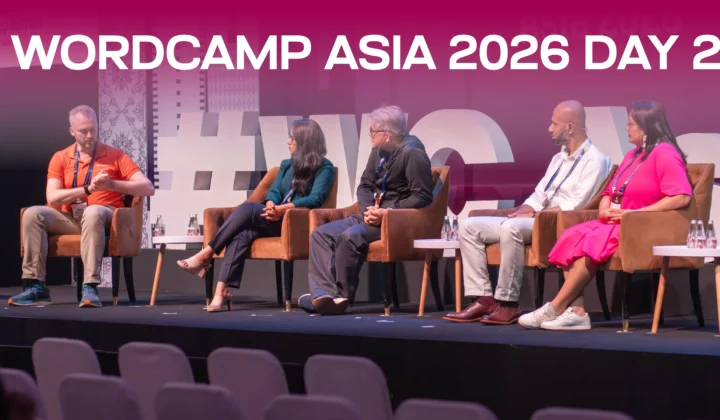
Along with them there were several other creators, YouTubers, and Odoo partner leaders on stage across the two days.
Who you meet there
The mix of people is what makes this event worth the trip.
Students in large numbers, many of them clearly there to figure out where they fit in the ERP and open-source world. Business owners looking for a system to run their company on. Developers and consultants comparing notes. Partner companies hunting for clients and for each other.
I met people I would not have met in a year of normal work. Some of those conversations will turn into something, some will not, but that is how events work.
What I actually learned
Coming out of two days, here is what stuck with me:
ERP is a problem-solving tool, not a software purchase. Every serious conversation I had eventually arrived at the same place a business has a specific bottleneck, and the question is whether the system removes it or just documents it. That reframing is the biggest thing I took home.
Depth beats breadth. I have worked around Odoo and ERP concepts, but this event made it very clear that knowing the modules at a surface level is not enough. Understanding inventory, procurement, accounting and manufacturing flows properly is what lets you actually advise a client instead of just implementing a request.
AI plus ERP is not a buzzword anymore. The automation demos I saw were concrete workflow automation, document handling, predictive stock. This is going to become a standard client expectation faster than most people think.
Learn from the operators. The speakers who built real businesses said more useful things about systems than any feature demo did.
For my own work, this directly extends what I do. I build websites, e-commerce, and automation for clients, and the natural next step is understanding the business layer underneath the ERP side that decides whether the front end is even useful. At the end of the day, every client has problems. Understanding more modules and more models is how you get better at solving them.
This was my second time, and I am fairly certain I will be there for a third.